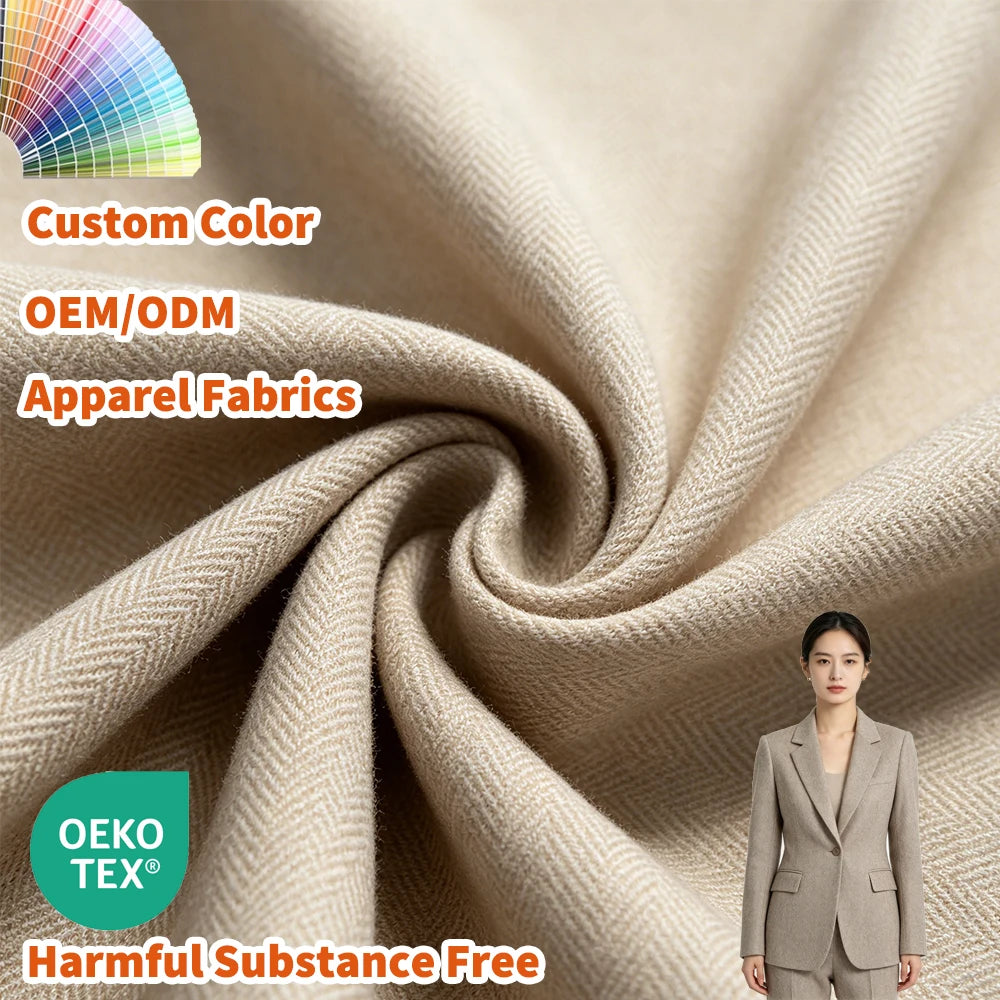
Ready Stock vs Custom Fabric Production

A program buyer should treat ready stock as an availability question and custom production as a lock on color, width, or backing. Choose the path that matches launch timing, then send that choice through Haida's request-quote page and Request With WhatsApp.


How should a program buyer choose between ready stock and custom?
Speed and exclusivity pull in opposite directions. A running quality can settle a sales sample faster when the mill already knits a close face. A custom build protects a brand color or a cutting width that leftover retail goods cannot provide. The wrong first move is to demand both: exclusive color on a promised ship date that the mill has not confirmed.
Write the launch constraint first. If the sofa line must reach a show next quarter and the cover can accept a nearest running face, ask whether that quality can be sampled now. If the line needs a private color, a locked usable width, or a backing the factory already printed on a bill of materials, start on the custom path. Timing pressure does not create confirmed inventory.
| Decision factor | Ready-stock inquiry | Custom production |
|---|---|---|
| Buyer job | Ask if a close running quality can be sampled | Lock a private spec before bulk talk |
| Color | Nearest running shade, photo as direction only | Lab dip or approved standard after a first look |
| Width and GSM | Accept the running build or walk away | State target ranges or unknown marks |
| Backing | Take the running back or reject it | Name fleece, coat, or none if the factory requires it |
| Exclusivity | Not assumed; other buyers may see a similar face | Needed when the collection must own the shade |
| Availability confirmation | Ask for quantity, color and lot availability | Custom page describes OEM scope, not a price list |
What does ready stock mean when inventory is not published?
On this store, ready stock is a question you ask, not a catalog you download. If a salesperson uses the phrase ready stock, treat it as a request to check current availability, then wait for a written reply.
Availability can change after a sample is cut. A hanger that exists today does not prove a bulk lot will exist next month. Ask the mill to say whether the sampled quality is a running article, a leftover, or a development that still needs yarn. Those three answers change reorder risk.
Write that distinction into the first WhatsApp message. If the mill answers leftover, plan a second quality before you print a catalog page around that hanger. If the mill answers running article, ask what happens when that article rotates. If the mill answers development, you are already on the custom path and should stop calling the request ready stock. Clear labels prevent a buying committee from treating a one-off cut as a replenishable program.
Which path should a locked sofa collection take?
A locked collection needs custom when the purchase order will later print a private shade, a fixed usable width, or a backing the sewing line already approved. Use custom warp-knit fabric for that OEM scope. Use request quote for the RFQ language on either path.
A collection that is still exploring look and handfeel should not open a full custom build on day one. Ask for a close running hanger first. If that hanger fails color or width, move to custom with the failed sample as the brief. That sequence costs one extra courier loop and avoids a lab dip you will abandon.
When should custom production wait?
Custom should wait when the only missing fact is whether the team likes the handfeel. Handfeel is a sample job, not a development job. Custom should also wait when the factory has not named width, backing, or application. A mill can propose those fields, but a proposal is not a locked bill of materials. Mark unknowns instead of guessing numbers that later fail incoming inspection.
Custom should not wait when the sales catalog already printed a unique shade or a width the cutting room cannot substitute. In that case, say the constraint in the first sentence of the WhatsApp message. Ask what inputs the mill needs before it will quote a development path. Those numbers are category-specific and are not published as a universal list.
Send the path choice through Request With WhatsApp with application, the ready-stock or custom label, and the spec fields you know.